
- Authors

The Paper Airplane Goes to Space
Lowering the Barrier
When we first started building, the earliest decision we made wasn't about technology. It was about environment.
The moment you ask a user to install something, you've already put up a wall. Asking for a download is really saying: "trust us before you know us." We wanted the opposite. Open a browser and it's already there. No questions asked, no setup required — it just starts.
So instead of a game engine, we chose Three.js. A library that renders 3D environments directly in the browser. Paired with React, that's how Universe ETH and Universe Blast were built — living entirely inside the browser. Not because it was the most powerful option, but because it was the most honest one for what we were trying to do.
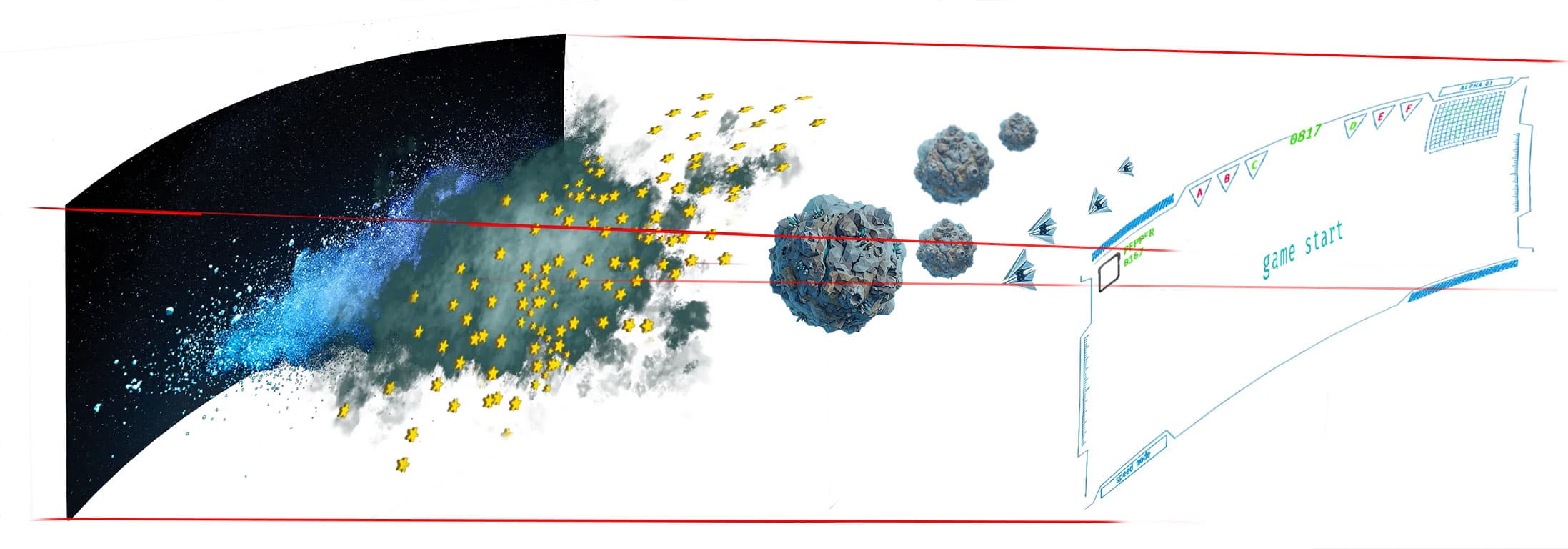
"Nothing should stand between someone and the moment they walk in. That was the first thing."
The Spaceship — What It Was Really For
Once the environment was in place, the next question came naturally. Inside this universe, what does a user actually ride?
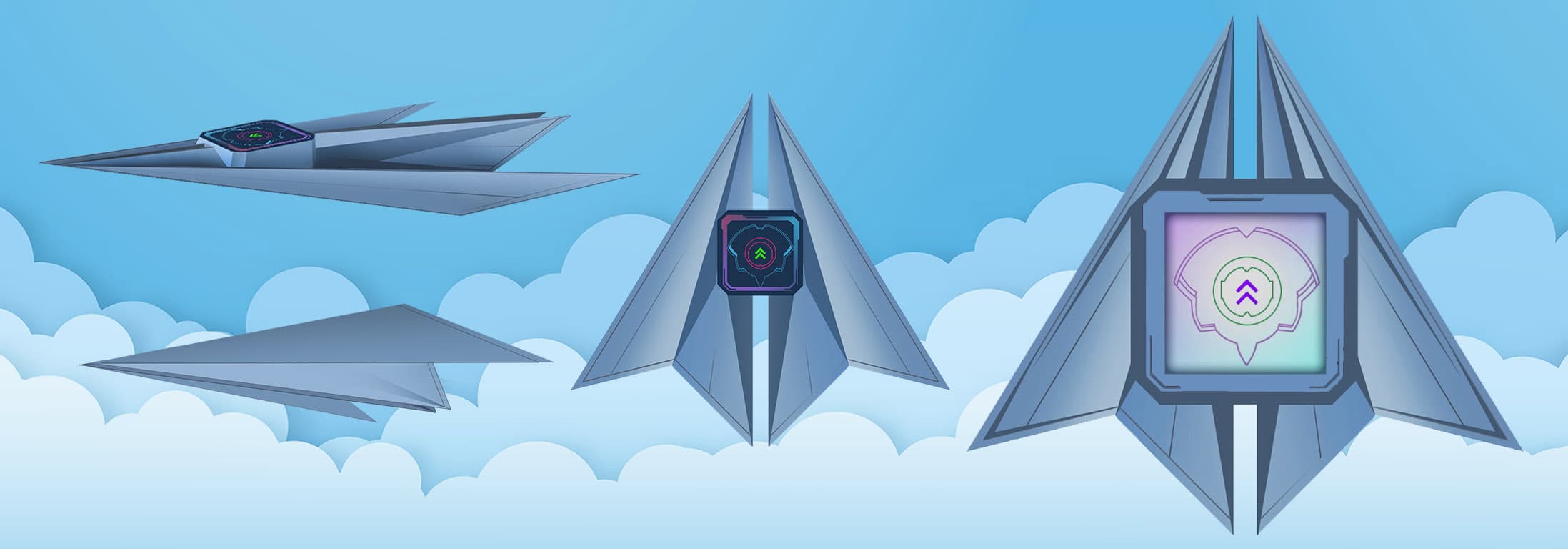
The starting point was the same one from Episode 01. The paper airplane. We took that motif and shaped it into 3D. But it wasn't just a visual — the Spaceship was designed to be the space where each user could carry their own NFT. The idea was to load your NFT into your Spaceship and move through the universe with it. Ownership and movement becoming one experience.
We built it small at first. But once it was floating in the universe, it barely registered. If users were going to feel like it was truly theirs, it needed to be seen. So we made it bigger. A small decision, but it was the moment that set the direction — the Spaceship wasn't just an object. It needed to be a vessel for the user's identity.
Why It Had to Be Spacebar
When we were building Universe ETH, the question we kept asking was this: what can a user do here?
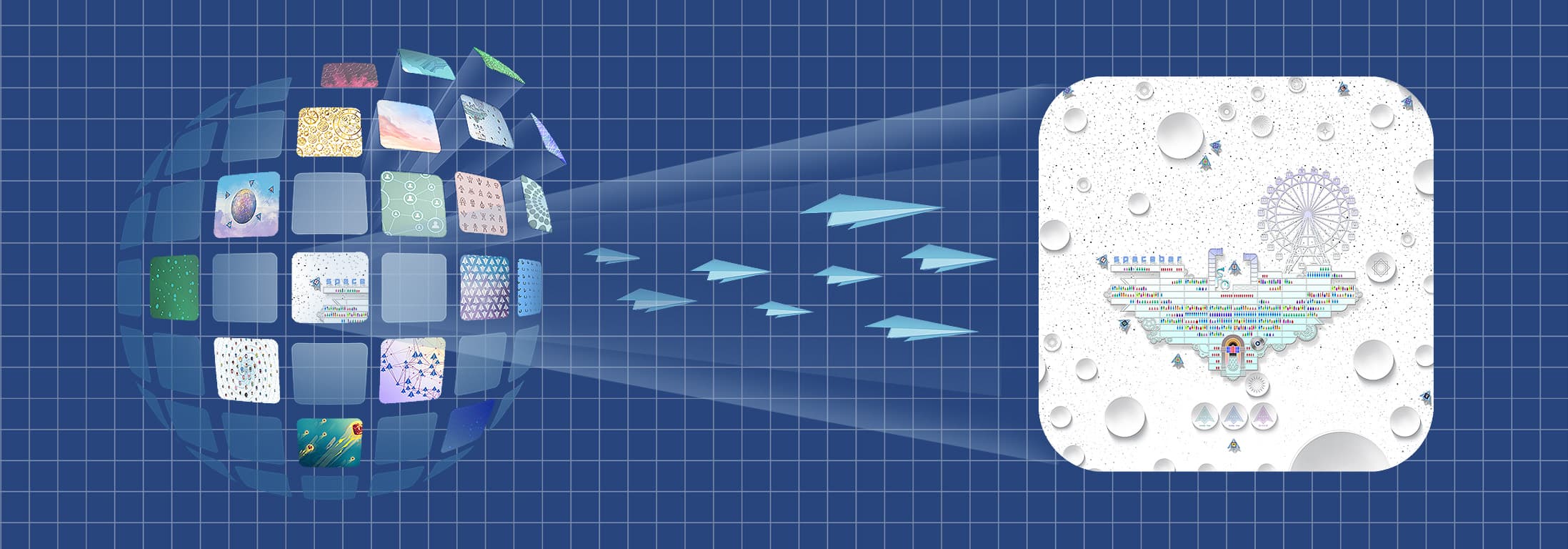
We built features, placed objects, layered experiences. Then, moving into Universe Blast, the question started to shift. From what can someone do, to why should someone be here. It wasn't just about functionality anymore. It was about reasons — reasons for a user to stay, reasons for a community to gather. Finding those reasons became the center of everything.
That thread never broke. Through Universe ETH and Blast both, the connection between user and community was always at the core. But moving into Outerspace, the question went somewhere deeper.
"At some point, building things isn't enough. You have to ask why you're building them."
What does the community actually want? Why does the product need to go in this direction? Outerspace started by going back to those questions first.
Rebuilding the Foundation
When Outerspace began, things changed. The biggest change was the engine.
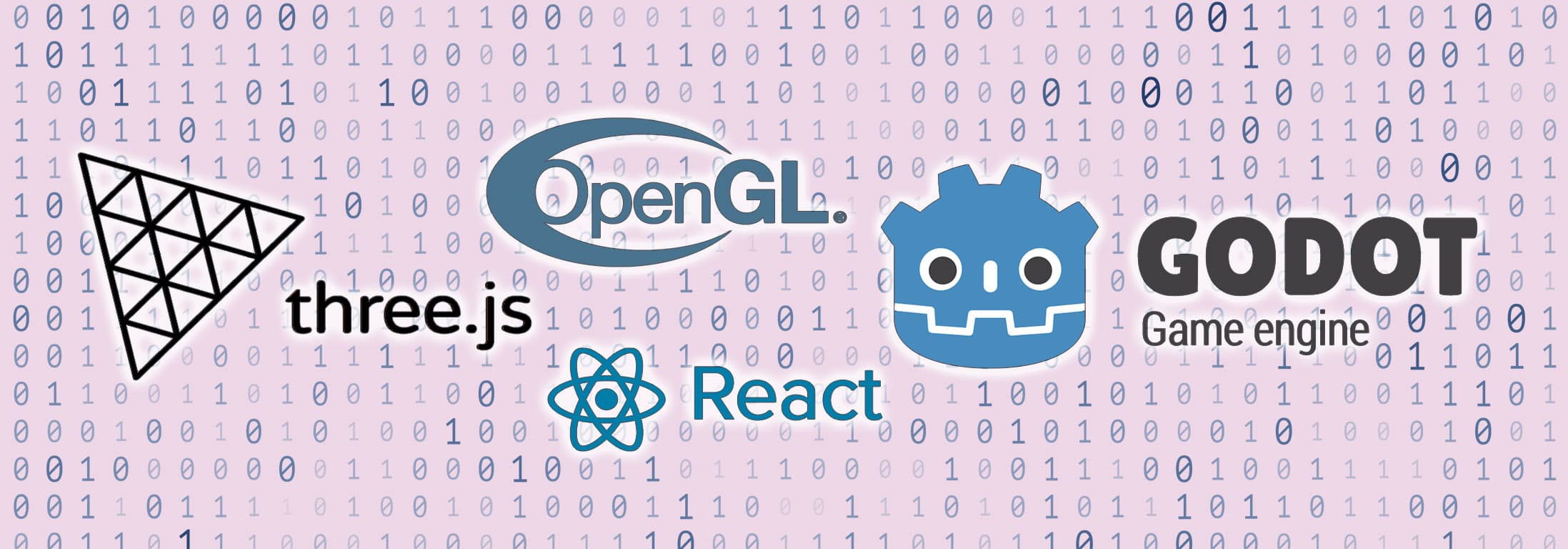
Three.js had been the right tool for Universe ETH and Blast — lightweight, web-native, enough for what we needed to build. But the picture we were drawing for Outerspace was different in scale. More to carry, and a foundation that needed to last.
It was time to choose an engine again. And standing in front of that decision, what we were dealing with wasn't just a technical question. AI was changing everything fast — development environments, tools, the entire landscape of the industry. Inside that shift, we needed a structure that wouldn't break when the ground moved. Something that would hold even as the technology around it kept changing.
We looked at Unity first. Capable enough. But Unity was in the middle of changing its licensing policy. No immediate problem, but no way to know where it was headed either. The more AI accelerated everything, the more risk there was in depending on a commercial engine with rules that could change at any time. We ran that simulation early.
So we chose Godot Engine. Open-source. Not tied to any single company's policy, no one with the authority to unilaterally change the rules. The transition wasn't easy. But changing before something breaks is always better than changing after.
"The faster technology moves, the more you need a foundation that doesn't."
Starting with Hyperliquid
From the moment we started designing the structure of Outerspace, multi-chain was already part of the picture. An environment where users could move freely between chains, taking the best of each — all within a single space. We drew that picture first, then built the structure to match it.
But everything couldn't start at once. One chain first, done properly.
We chose Hyperliquid. The speed, the character of the community, the direction it was heading — it was a chain that aligned with the world Spacebar was trying to build. On top of that, we designed the world, built the structure, and laid the environment.

Go deep on one before going wide on many. That's how Outerspace began.