
- Authors

Outerspace, Reborn
The Early Days
When we opened Universe ETH, and then Universe Blast, the response was fast. A large number of users signed up in a short time, and by the numbers, things looked active. But as time passed, something became clear. The gap between registered users and actually active users was real. Many came in. Few stayed.
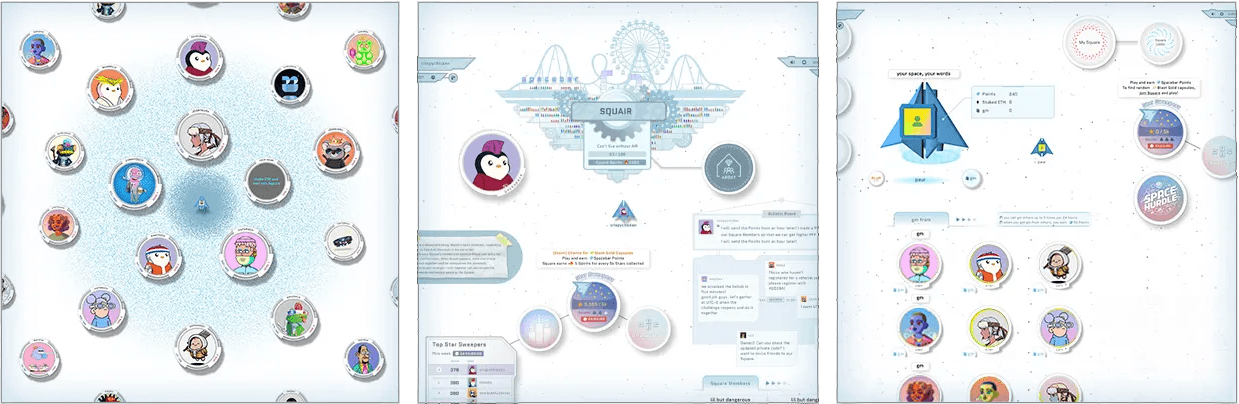
The Web3 Playground we were trying to build — a space where users connect freely and find their own reasons to be there — still had gaps that needed to be filled.
"Numbers don't lie. But numbers don't tell the whole story either."
Looking Back Honestly
The product we offered sparked curiosity, but it didn't create enough reason for people to stay long-term. That became the starting point for Outerspace.
Getting the Foundation Right
Outerspace took a different approach. Instead of a structure where the developer lays everything out and pulls users along a predetermined path, we focused on building the right foundation. The rest would be filled in by users, in the direction the community wanted. Not a product where the answers are already decided — but a platform where the community asks the questions and builds the answers together.
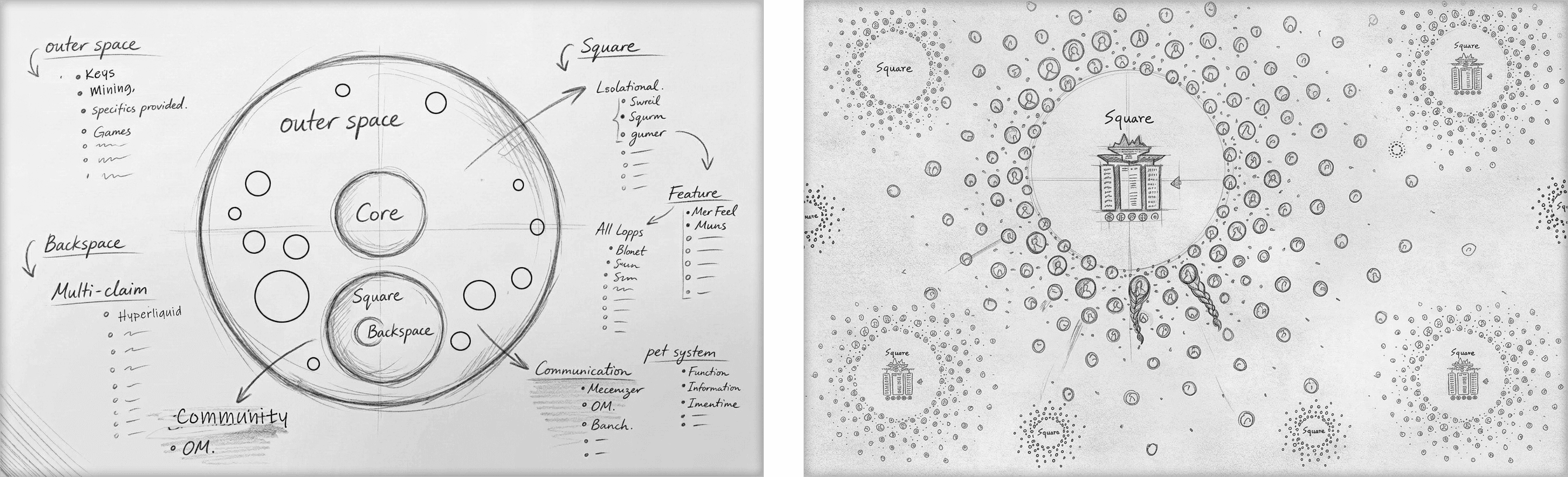
"We can't build everything. And we shouldn't."
Beyond short-term goals, toward a real Web3 social platform. That's where the design of Outerspace began.
The Color of the Universe Changed
Moving into Outerspace, things changed technically as well. The shift from Three.js to Godot Engine was covered in Episode 03. And alongside that shift, the look of the universe itself changed.
As we talked about in Episode 02, Universe ETH and Blast were white universes. Bright, open spaces. That was the message we wanted to send to Web3 at the time. But in Outerspace, we went back to a dark universe. Deeper, more vast, closer to what space actually looks like.

A bright universe was good for showing things up close. But what we were trying to build in Outerspace wasn't a close space. It was a universe without a visible end — one where many people could exist together, anywhere, without the limits of concurrent connections. To express that sense of infinity, darkness was more honest.
"Brightness shows you the space. Darkness makes you feel it."
How to Divide a Universe
As the space grew, a natural question followed. How do you design this universe?
Multi-verse was part of the picture from the beginning. Not one massive universe, but a structure where space could be divided and expanded. As users grew, as communities formed, as new chains were added — the design needed to hold all of it.
The ideation took a long time. The size of the universe, how to divide the space, how expansion would work. It wasn't just about what was needed right now — it was about drawing the picture of how it would grow. We already knew that if you don't design for scalability from the start, you end up rebuilding everything later.
Giving Value to the Birth of Space
The ideation took shape through experimentation. Through countless rounds of version testing, we gave each space inside the universe a role and a meaning.
The first thing we defined was a space users could belong to. Square was the unit where communities gathered. A structure where you could create your own Square, or explore and join others. Inside a Square, users could engage in community activities together, share information, find opportunities, hang out, and play.
Then there was the personal space. Backspace. The place you belong to, the place you return to. If Square was the community's space, Backspace was yours. Where identity accumulates.
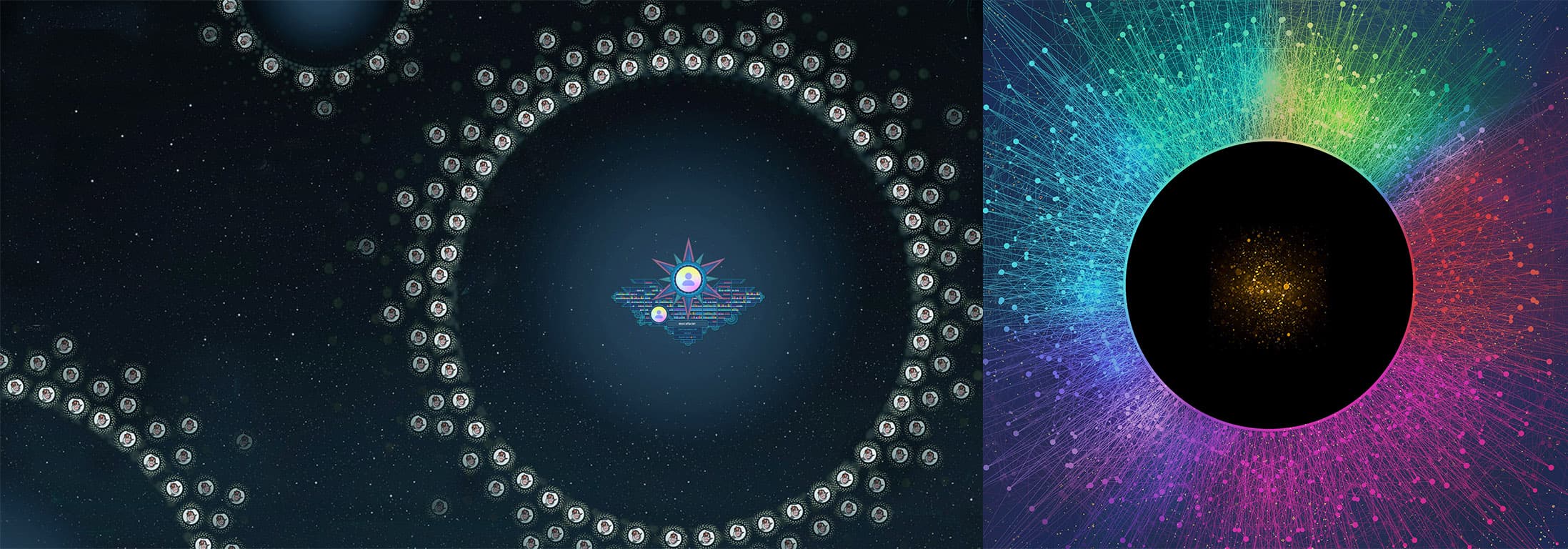
At the center was Core. The axis connecting Square and Backspace, holding the structure of the entire universe together. These three — Square, Backspace, Core — became the core triangle of Outerspace. And between them, the universe existed. A space to move through, explore, and discover the unexpected. That layering gave the universe its depth.
Zone was different. It wasn't a space designed to show users right away. It was a long-term conceptual design — built and set aside for when the community and product grow large enough to need it. The framework is there, waiting to be used when the time comes.
"Square, Backspace, Core — once the three axes were in place, the universe between them finally began to mean something."
A Universe Born from Triangles
Once the spaces had names, the question of how to structurally arrange them followed.
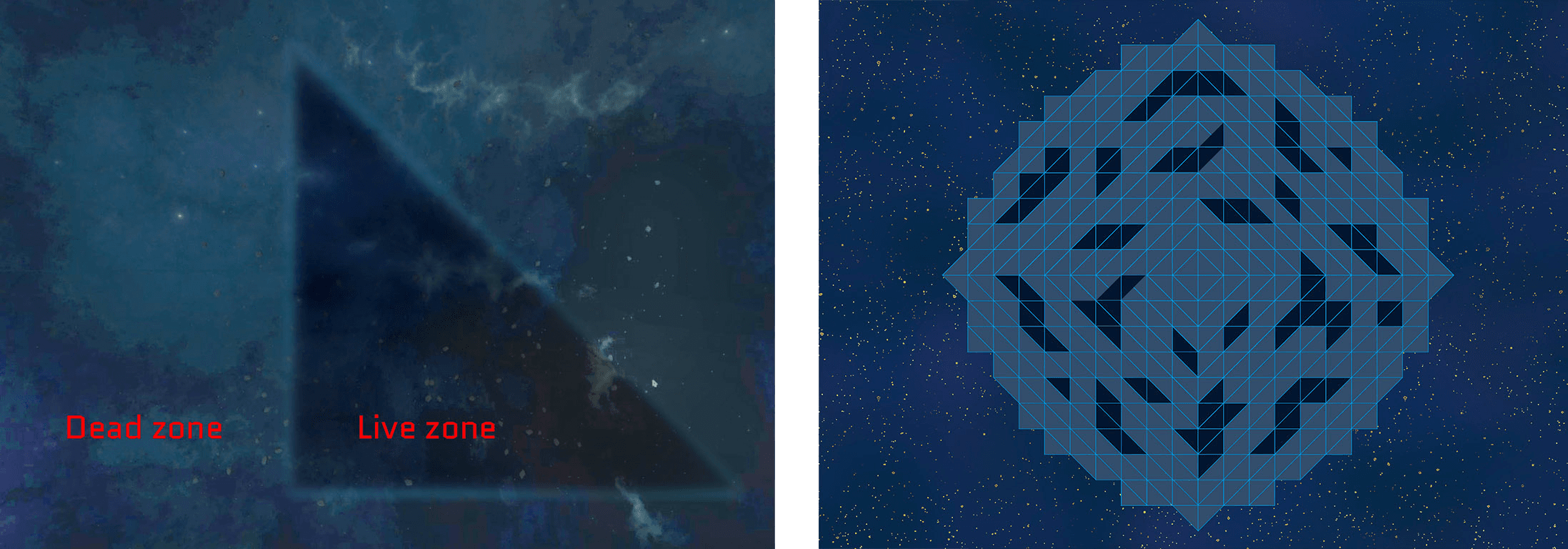
The basic unit of every space was defined as a triangle. Starting from the concept that the minimum unit forming a sphere in 3D space is a triangle. Multiple triangles come together to form a space, and those spaces stack to become a universe.
And then we gave that universe numbers. The total number of Zones: 8,192. Inside a single State, including Live Zones and Dead Zones: 512 triangular spaces. The total number of States: 16. The universe feels infinite, but it exists within defined numbers. That limitation creates the uniqueness of each space — and the value of the users and communities within it.
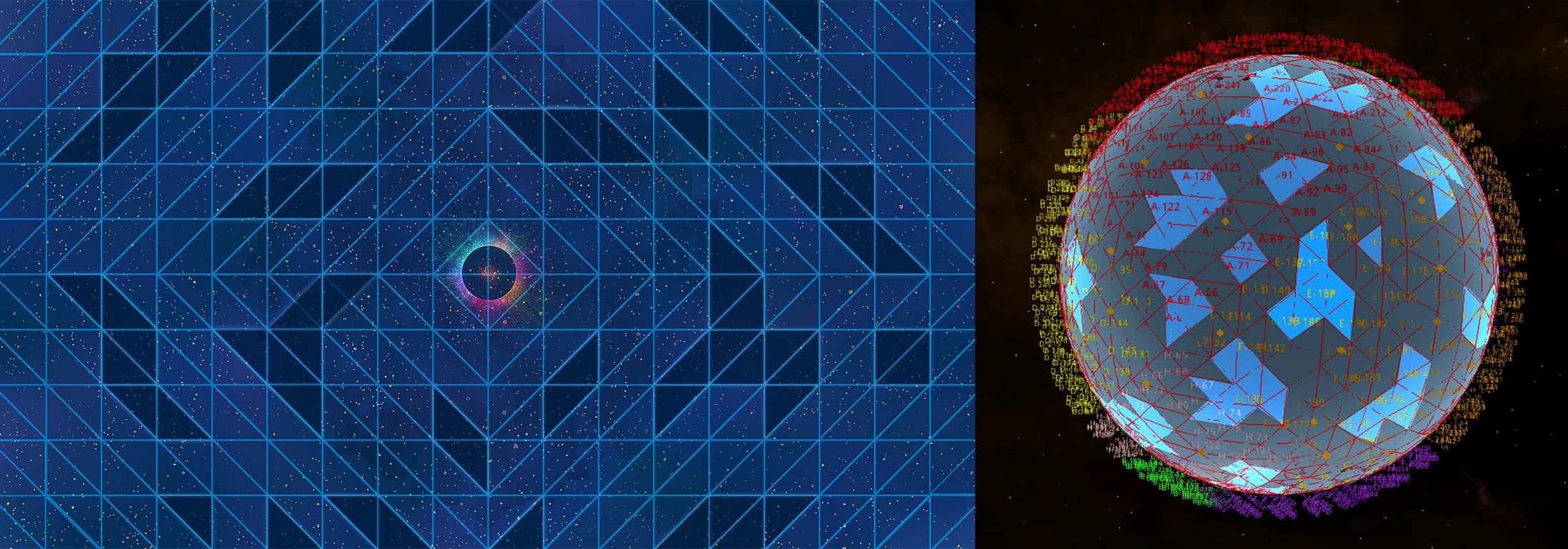
"An infinite but limited universe. Inside it, everyone finds their place."
And so Outerspace was born — like the Big Bang.